Brest divers talk about the underwater world, thermocline, and zero visibility
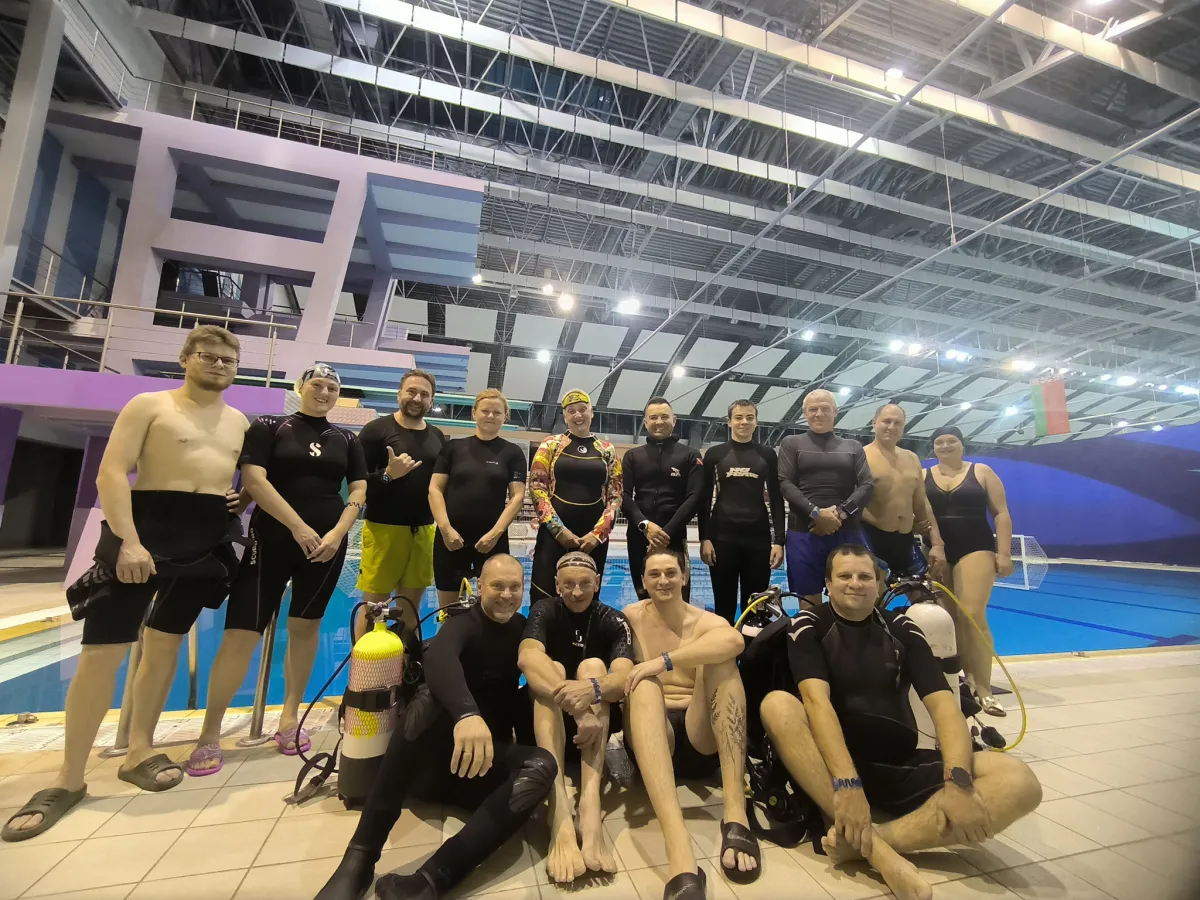
In an interview, Ruslan Khatynyuk, a member of the presidium of the Belarusian Federation of Underwater Sport (BFPS), head of the technical committee, and diving instructor, and Alexey Sledzevsky, an advanced CMAS 2-star diver, spoke about the secrets held by the underwater world of the Brest region and why diving is always self-improvement.
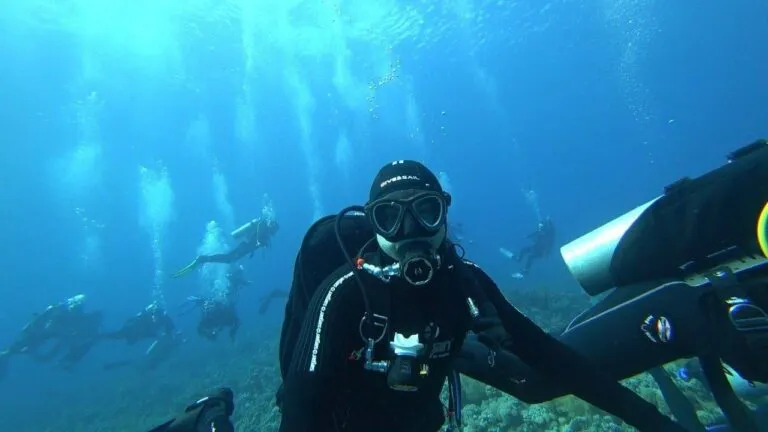
Everyone has their own path into the "club" of underwater odyssey enthusiasts. Ruslan Khatynyuk recalls that it all started out of sheer curiosity in 2008 when he responded to an offer to see the underwater realm of the Red Sea. That Egyptian introductory dive made such an impression on him that upon returning to Brest, he began studying the field, completed training according to international standards at BFPS — the official representative of the World Underwater Federation (CMAS) in Belarus — and received his first certificate. Initial curiosity grew into a real addiction and hooked him so much that over time Ruslan became a professional instructor.
“If a person has the opportunity to live an unusual life, they have no right to refuse it,” the Brest diver loves to quote the legendary Jacques-Yves Cousteau, and as an expert, he asserts that Belarus's underwater life is no less fascinating than overseas waters. “In our lakes and flooded quarries, real ‘forests’ of pondweed, elodea, hornwort, and charophyte algae form,” Ruslan lists with enthusiasm. “Pike hunt in these underwater thickets, schools of perch and roach maneuver, and in the depths, you can encounter the master of the rivers — the catfish. In quarries with clean water and high visibility, frequent guests are freshwater crayfish, which are key indicators of ecological purity, and freshwater sponges that cover sunken snags with an emerald carpet.”
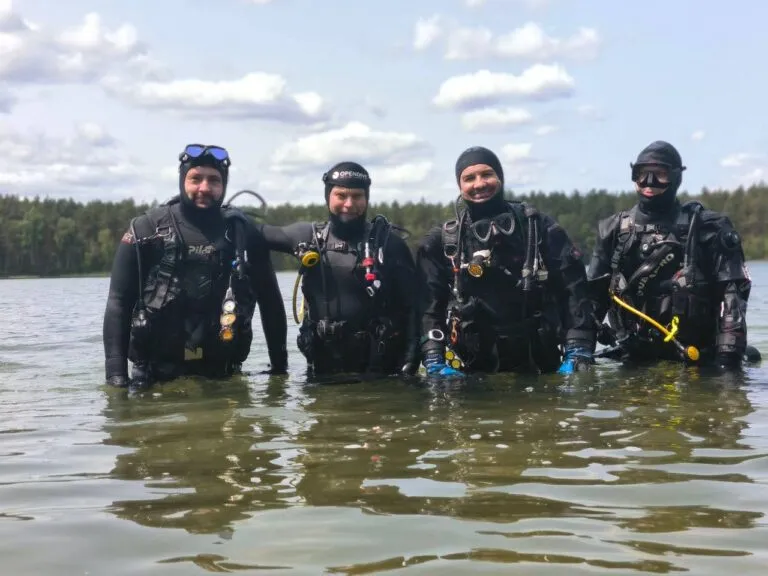
However, Belarusian diving requires a much higher level of qualification. The main "enemies" here are cold and poor visibility. “If in Egypt at a depth of 20 meters you can see your partner, here at two meters you can't even see the tip of your own nose.” Dives in our water bodies are a special art, as Belarusian reservoirs with decaying foliage and marshy terrain dictate their own rules. Cold fresh water requires immaculate buoyancy control technique: you need to move in such a way as to avoid stirring up the viscous silt with your fins — in some places, it reaches the level of a diver's neck. Otherwise, divers turn into "blind kittens": at zero visibility, even the light of a flashlight is indistinguishable. Therefore, diving is a collective sport where you cannot rely solely on yourself. “There is no such thing as a safe depth,” claims Ruslan, who as one of the most experienced instructors in Brest usually leads the chain of divers. “You can choke even in a soup plate. That is why we always dive only in a group and strictly follow safety rules.”
Deep Fears
Ruslan Khatynyuk shared that despite the fact that only people with CMAS certificates have the right to dive in open water bodies, at zero visibility in local waters, beginners and even experienced "Egyptian" divers get lost and panic. Underwater, where there are no familiar landmarks, an inexperienced person can lose orientation, failing to understand where up and down are. There have been cases when novices in stressful situations dropped their equipment and, holding their breath, surfaced safely only due to the shallow depth. An experienced diver, however, understands where up is even when they see nothing, because they feel their body and gear. The head of the BFPS technical committee recommends navigating by depth gauge, dive computer, or watch. Alternatively, you can remove the mouthpiece, press it, or simply release air from your mouth and follow the bubbles to understand where up is.
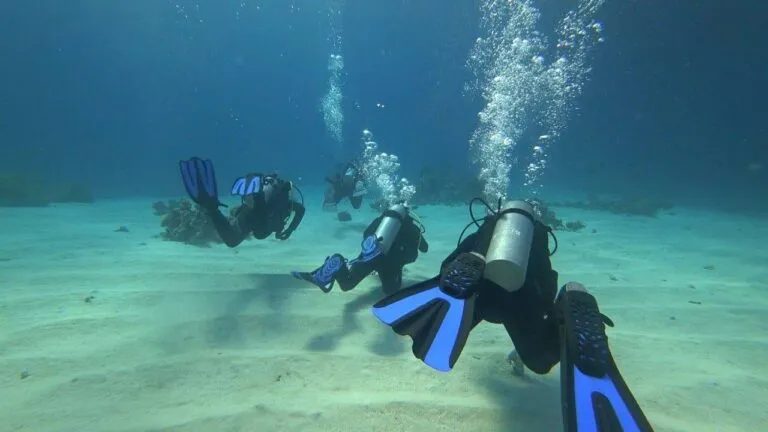
Another "surprise" waiting at depth is the thermocline — a sharp boundary in a water body at about five to six meters depth where warm water meets cold, and the temperature drops to +4 degrees Celsius even in summer heat when surface water warms up to +26 degrees. Here, local scuba diving enthusiasts are rescued by a special warm wetsuit. But even in icy water, Belarusian divers find their own aesthetics: unlike the colorful corals of southern latitudes, the local underwater world requires a special ability to see. It is a world of shadows, silhouettes, and muted tones where history is frozen at the bottom of rivers and lakes. Therefore, visibility in our waters is a philosophical concept: to find something, you must first stop searching with your eyes and start feeling with your heart.
Dangers also await divers in the form of fishing nets, which a person underwater cannot see any better than a fish. Therefore, experienced divers recommend including a knife in their kit, or better yet two: one secured to the arm, and the other to the leg. And to avoid accidentally getting under a moving motorboat during descent, the arsenal of Brest divers includes a special "alpha flag" and bright orange canisters marking the dive site. All of this makes underwater diving in local water bodies a serious challenge requiring experience, equipment, and composure.
Treasure Hunter
Alexey Sledzevsky is a person for whom diving has become not just a hobby, but a way to reset. “After a dive, I feel reborn,” Alexey admits. “It's my addiction. We dive even in winter, and if there is no opportunity to go out to a water body, we go to the pool.”
Having loved diving since childhood and watching underwater wildlife while holding his breath, he first got into underwater searching, bought a metal detector, and then passed the diver exam. Now he not only helps acquaintances retrieve lost phones, watches, and other "valuables" from the bottom, but with every dive, like a true sanitation worker of the aquatic depths, he hauls out entire bags of garbage. “You wouldn't believe what I've found,” Alexey shares, “glasses, mugs, forks, empty and full plastic and glass bottles, boat oars, scooters, various jewelry, paper money, fishing tackle, caps, hats. Lately, there have been a lot of batteries and electronic cigarettes.”
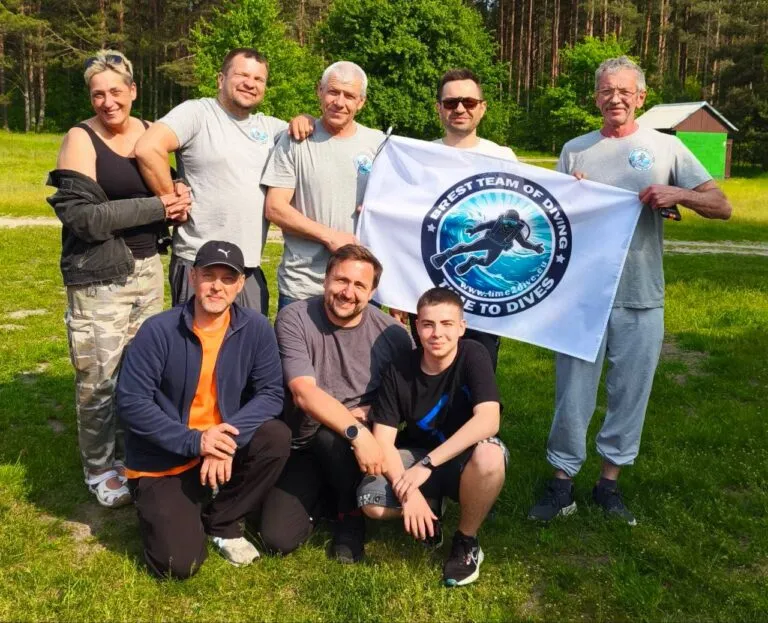
Alexey jokes that he already has a whole collection of fishing rods, spinning gear, and other fishing accessories, as well as rare everyday household items from Soviet times. But his most valuable find is vintage fishing spoons, which only confirmed that under water there is not just a "wet" space, but a whole world that needs to be studied and protected.
The hero shared that on the first Sunday of June, on International Clean Water Day, the Brest diving community regularly conducts a major cleanup of local rivers and lakes. On this day, divers together with volunteers clean up not only the coastal zone but also the bottom. “This is not just a tribute to tradition, but a civic stance. We lift tons of garbage from the bottom, saving the aquatic ecosystem. This is hard work, but it yields real results: water bodies become cleaner, and people begin to think that throwing garbage into water is not normal.”
Underwater Routes
And when traces of human activity are removed from the bottom, you can admire local beauties. The underwater world of the Brest region is a separate universe capable of rivaling a tropical one. It turns out that special exotic sights can be seen in the Mukhavets along the eco-trail. Unlike other sections of the river where Brest diving turns into real extreme sports, and due to zero visibility Alexey, moving by touch, once even crashed his mask into a tree, here during the autumn period, it is a true fairy tale. Under water, "coral reefs" of freshwater sponge (badyaga) open up to the gaze, shimmering and playing with bright colors.
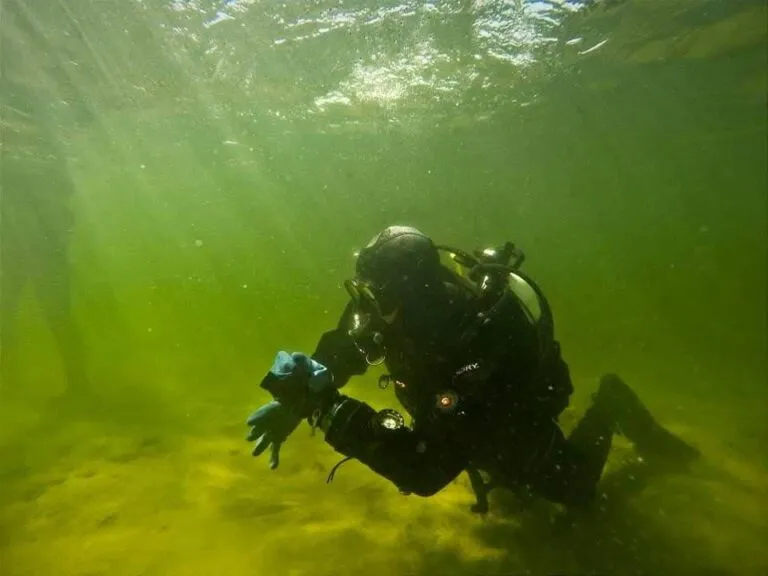
My interlocutor filmed the amazing and richest underwater world last autumn when he was moving in a wetsuit on a breath-hold with colleagues along the Lesnaya River from Rynkovka to Kleyники. The beauties of the aquatic flora of Lake Mulnoye in the Ivanovo district and Lake Beloye near Ivatsevichi are no less breathtaking.
However, the favorite spot of Brest underwater explorers is Lake Goluboye in Gershony, which attracts visitors with clear water and an interesting bottom topography. In summer, visibility here reaches 5–7 meters, and in winter up to 10–12 meters. The water here is the clearest, and life is in full swing. Local inhabitants have long gotten used to guests in wetsuits. Alexey Sledzevsky recalls an instance when a huge catfish accompanied him during a dive like a domestic pet. Moreover, dives at Goluboye allow divers to practice navigation, compass work, and movement skills in low-visibility conditions, which are so necessary in real expeditions.
Of course, Brest divers do not limit themselves to local water bodies. They also dive in the most iconic locations of world diving down to a depth of 60 meters. One of the most emotionally powerful places is the sunken ferry Salem Express in the Red Sea, which struck a reef in 1991 and went to the bottom in a few minutes along with hundreds of pilgrims. Today, the ship lies at a depth of 10–32 meters and is considered an underwater memorial that divers treat with special respect…
“Diving is not just a hobby or a sport,” Ruslan Khatynyuk summarizes, “but a way of life where you learn to trust, overcome fear, and see beauty where others see only darkness and cold. And those who plunge into the underwater world return to the surface as different people.”
Author: Irina FYODOROVA, original publication, newspaper "Brestsky Vestnik" - Exclusive "BV", 18.10.2026 — Brest divers talked about the underwater world, thermocline, and zero visibility